

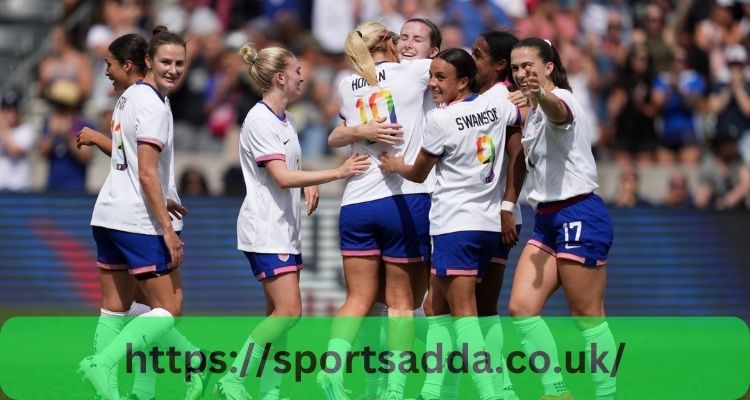
Ask ten fans what the United States Women’s National Soccer Team Standings look like right now and you will probably get ten different answers. A national team does not sit in a league table the way a club does. There is no weekly ladder, no points total that rolls forward from August to May. What exists instead is a patchwork: a FIFA world ranking that moves a few decimal points after every window, tournament tables that last two weeks, a win-loss record that changes with each friendly, and a qualifying bracket that decides who gets to play in Brazil in 2027. This article pulls all of that together as of early November 2026, shows the ten most recent matches, walks through the players on both sides of the team’s latest big test, and ends with answers to the questions people actually search for.
Why “standings” means something different for a national team
Club soccer has trained us to look for a table. National team soccer does not offer one outside of a handful of competitions, and even then the table is temporary. When people type a query about the USWNT’s standing, they are usually trying to learn one of four things: where the team sits in the FIFA rankings, how it has done in its most recent tournament, what its record looks like across the calendar year, or whether it has qualified for the next World Cup.
Each of those has its own answer, and they do not always agree. A team can sit near the top of the world ranking while stumbling through a pair of friendlies. A team can win every game of a short invitational tournament and still lose a ranking spot because the points formula weighs friendlies lightly. Keeping the four ideas separate is the only way to read the situation without getting confused, so that is how the rest of this piece is organized.
Where the team stands right now
The FIFA world ranking
The United States is one of the two best teams in the world by FIFA’s measure, but the exact number depends on which list you read and when it was published. Concacaf’s own seeding for its qualifying tournament used the April 2026 ranking and placed the Americans first among the region’s eight teams. One recent preview describes the U.S. as currently second in the world, while Spain was labelled world number one when the two sides were scheduled to meet in October. In other words, the top spot has been contested between these two, and a pair of results in October was always going to matter.
If you care about the precise figure, check FIFA’s official ranking page on the day you read this. It updates after each international window, and the next update will follow the Concacaf W Championship.
The 2026 record
Through the end of the spring and early summer, the team had won eight of ten matches in 2026 and conceded just four goals while scoring 22. Then came the Spain doubleheader in October. A 2-0 defeat in Washington was followed by a 2-2 draw in Chester, Pennsylvania. By my own count from the match sheets, that leaves the 2026 calendar year at eight wins, one draw and three losses from twelve games, with 24 goals scored and eight conceded. Those are strong numbers for a team that has also been integrating younger players and welcoming back some returning names.
The last tournament table
The most recent actual table the Americans appeared in was the SheBelieves Cup in March. They took all three games: 2-0 over Argentina in Nashville, 1-0 over Canada in Columbus and 1-0 over Colombia in Harrison, New Jersey. That is nine points from nine, three goals scored in the tournament’s first two games plus a late winner against Colombia, and no goals allowed. It was not flashy soccer, but the scoreline in each match shows a team comfortable closing games out.
The qualifying bracket
This is where the United States Women’s National Soccer Team Standings become genuinely high stakes. The 2026 Concacaf W Championship runs from 27 November to 5 December in Texas and doubles as the qualifier for both the 2027 World Cup in Brazil and the 2028 Olympics in Los Angeles. The format is a straight knockout. The four quarterfinal winners advance to the semifinals and secure World Cup places automatically; the losers drop into play-in matches for the remaining spots.
The Americans, seeded first, open against El Salvador on 27 November at Texas Health Mansfield Stadium in Mansfield. El Salvador are making their debut in the tournament and were ranked 78th in the world in April, their highest ever. This will be the first meeting between the two countries in women’s soccer. A win sends the U.S. to Brazil. A loss would be one of the largest upsets in the history of the women’s game and would force the team through the play-in route. Nobody in the American camp is treating it that way, but it is worth knowing how little margin the format allows.
How the year unfolded
The season started quietly, with two January friendlies against Paraguay and Chile in California that produced a combined score of 11-0. Those camps leaned heavily on newer faces, which made them useful as scouting exercises but less informative about the first-choice side.
March brought the SheBelieves Cup, which is when the regular starters returned. The results were narrow but clean. Ally Sentnor scored the only goal against Canada, Alyssa Thompson scored a late one against Colombia, and the Argentina game was settled by Lindsey Heaps and Jaedyn Shaw.
April was a three-game series against Japan, and it showed how quickly momentum can swing. The United States won the first match 2-1 in San Jose, lost the second 1-0 in front of more than 36,000 people in Seattle, then bounced back with a 3-0 win in Commerce City, Colorado. For that third game, head coach Emma Hayes reshuffled the back line, and a Naomi Girma goal opened the scoring right after halftime.
In June the team traveled to Brazil. The first game in São Paulo ended in a 2-1 loss, even though Sophia Wilson put the visitors ahead inside the first few minutes. The return match in Fortaleza, in front of a crowd of more than 55,000, was a bad-tempered affair that finished 1-0 to the Americans through an own goal and featured a long list of cards, including several red cards on the Brazilian side.
Then came October and Spain, the world champions. The Americans looked outclassed for most of the first game and slightly better, if still behind, in the second. More on that below.
The latest ten matches
The table below lists the ten most recent USWNT matches, newest first, with the United States’ score shown first in every row. All data comes from published match records and the federation’s reports.
| # | Date | Opponent | Result | Competition | Venue | U.S. scorers |
|---|---|---|---|---|---|---|
| 1 | 13 Oct 2026 | Spain | 2-2 (draw) | International friendly | Subaru Park, Chester, PA | Ashley Sanchez 49′, Mallory Swanson 86′ |
| 2 | 10 Oct 2026 | Spain | 0-2 (loss) | International friendly | Audi Field, Washington, DC | None |
| 3 | 9 Jun 2026 | Brazil | 1-0 (win) | International friendly | Arena Castelão, Fortaleza | Isabela (own goal) |
| 4 | 6 Jun 2026 | Brazil | 1-2 (loss) | International friendly | Neo Química Arena, São Paulo | Sophia Wilson 2′ |
| 5 | 17 Apr 2026 | Japan | 3-0 (win) | International friendly | Dick’s Sporting Goods Park, Commerce City, CO | Naomi Girma 47′, Rose Lavelle 56′, Kennedy Wesley 64′ |
| 6 | 14 Apr 2026 | Japan | 0-1 (loss) | International friendly | Lumen Field, Seattle, WA | None |
| 7 | 11 Apr 2026 | Japan | 2-1 (win) | International friendly | PayPal Park, San Jose, CA | Rose Lavelle 9′, Lindsey Heaps 48′ |
| 8 | 7 Mar 2026 | Colombia | 1-0 (win) | SheBelieves Cup | Sports Illustrated Stadium, Harrison, NJ | Alyssa Thompson 82′ |
| 9 | 4 Mar 2026 | Canada | 1-0 (win) | SheBelieves Cup | Scotts Miracle-Gro Field, Columbus, OH | Ally Sentnor 55′ |
| 10 | 1 Mar 2026 | Argentina | 2-0 (win) | SheBelieves Cup | GEODIS Park, Nashville, TN | Lindsey Heaps 19′, Jaedyn Shaw 56′ |
Across these ten games, the team has six wins, one draw and three losses, scoring 13 and conceding eight. Look closer and a pattern appears. Two of the three losses came against the two highest-ranked opponents of the stretch, Spain and Brazil. The third, the 1-0 loss to Japan in Seattle, was the only home game in which the Americans failed to score against a team outside the very top tier, and they answered it three days later with a three-goal win against the same opponent.
A closer look at the October games
The first Spain match was the harder one to watch. Patricia Guijarro scored in the third minute and Eva Navarro doubled the lead in the fourteenth after the Americans lost track of runners inside their own box. Spain had been fouling consistently, and Athenea del Castillo was sent off in stoppage time, but the damage was done long before that. Hayes’ players created chances in the second half, including a goal from Sophia Wilson that the live blog described as a low finish past the goalkeeper, but the game stayed at 2-0 on the final scoresheet.
The night had one important footnote. Mallory Swanson came on in the 66th minute for her first appearance in 710 days, following the birth of her daughter, and became the 19th mother to play for the national team. Ashley Sanchez, absent from the squad for almost two years, also came on as a substitute.
Three days later in Chester the Americans conceded twice again before halftime, with Alexia Putellas and Salma Paralluelo scoring in the 27th and 32nd minutes. The difference was what happened afterward. Sanchez, making her first start in two years, pulled one back four minutes after the restart, set up by Wilson. Hayes then emptied her bench, and Swanson equalized in the 86th minute from a Michelle Cooper pass. A draw against the world champions, after being two goals down at halftime, felt like a win in the room even if it did not count as one.
The USWNT: who is in the squad
Emma Hayes has been the head coach since November 2023, and her approach has been to use a wide pool rather than fix a rigid first eleven. That makes any single list of players somewhat provisional, but the October matches and the spring games give a fairly clear view of who matters. The players below appeared in the match sheets for the games covered above.
Goalkeepers
| Player | Notes |
|---|---|
| Claudia Dickey | Started both April wins over Japan’s first and third games, the Fortaleza win in June and the first Spain game in October. The most frequent starter of the year. |
| Phallon Tullis-Joyce | Started the SheBelieves wins over Canada and Colombia, the Seattle loss to Japan and the October draw in Chester. |
| Mandy McGlynn | Started in São Paulo and has been a regular third option; also featured in the January camp. |
Defenders
| Player | Notes |
|---|---|
| Naomi Girma | The central defender around whom the back line is built. Scored against Japan in April. Was ruled out of the October games with an injury, a notable absence against Spain. |
| Emily Fox | Fullback who started most of the key games, including both October matches. |
| Tierna Davidson | Center back who returned in the spring and started both Spain matches. |
| Emily Sonnett | Experienced center back, a starter in many of the spring and June games. |
| Gisele Thompson | Young fullback with starts in March, April and October. |
| Avery Patterson | Versatile defender who has played both fullback and center back this year. |
| Kennedy Wesley | Scored against Japan in April and started both Spain games. |
| Tara Rudd | Frequent squad member who started in the Argentina game and has been used off the bench since. |
| Kate Del Fava | Appeared as a substitute in the October series. |
Midfielders
| Player | Notes |
|---|---|
| Lindsey Heaps | Captain in most of the games covered here and the engine of the midfield. Scored against Argentina and Japan. |
| Rose Lavelle | Creative midfielder with goals against Japan in April and an assist for Sanchez-adjacent play in October. A central figure when fit. |
| Sam Coffey | Holding midfielder who started the key SheBelieves and April matches. |
| Claire Hutton | Disciplined, ball-winning midfielder; captained the side in Seattle. |
| Lily Yohannes | Young midfielder who started the Spain opener and was introduced in the second game. |
| Olivia Moultrie | Attacking midfielder who has come off the bench in several recent matches. |
| Jaelin Howell | Midfielder who featured in the October series. |
Forwards
| Player | Notes |
|---|---|
| Trinity Rodman | Wide forward who started most of the biggest games and assisted Lavelle against Japan. |
| Sophia Wilson | Striker who scored in São Paulo and set up Sanchez’s goal against Spain in Chester. |
| Alyssa Thompson | Winger with the late winner against Colombia in March. |
| Ally Sentnor | Scored against Canada in March, and twice against Paraguay in January. |
| Mallory Swanson | Returned in October after more than 700 days away and equalized against Spain. |
| Ashley Sanchez | Back in the squad after a long absence; scored in her first start in two years. |
| Michelle Cooper | Supplied the pass that led to Swanson’s equalizer. |
| Jaedyn Shaw | Scored against Argentina and assisted in the third Japan game. |
| Emma Sears | Regular forward option off the bench through the spring. |
The other side: Spain’s squad
The question “both teams” naturally points to the opponent that has defined the last month. Spain arrived in the United States as reigning World Cup champions and left having beaten the Americans once and drawn with them once. They are coached by Sonia Bermúdez. The October match sheets give a good picture of the team.
Goalkeepers
| Player | Notes |
|---|---|
| Misa Rodríguez | Started the second game in Chester. |
| Ardiana Nanclares | Started the first game in Washington. |
| Eunate Astralaga | Part of the squad for both matches without playing. |
Defenders
| Player | Notes |
|---|---|
| Irene Paredes | Captain in the Chester match. |
| Laia Codina | Captained the side in Washington. |
| María Méndez | Started both games in the heart of defense. |
| Ona Batlle | Right back who started the first game and came on at halftime in the second. |
| Lucía Corrales | Left-sided defender in the first game, used as a forward-minded sub in the second. |
| Andrea Medina | Played on the left in the second game. |
| Oihane Hernández | Started the second match. |
Midfielders
| Player | Notes |
|---|---|
| Alexia Putellas | Two-time Ballon d’Or winner who scored the opener in Chester and assisted in the same match. |
| Patricia Guijarro | Scored the third-minute opener in Washington. |
| Clara Serrajordi | Assisted Putellas’ goal in Chester after coming on at halftime in the first match. |
| Fiamma Benítez | Started in Washington. |
| Natalia Ramos | Came off the bench in both games. |
| Ornella Vignola | Late substitute in both matches. |
Forwards
| Player | Notes |
|---|---|
| Salma Paralluelo | Assisted the second goal in Washington and scored in Chester. The most dangerous runner in either game. |
| Eva Navarro | Scored the second goal in Washington after the Americans lost her in the box. |
| Edna Imade | Provided the assist for the first goal and started both matches as the lead striker. |
| Athenea del Castillo | Sent off in stoppage time of the first game. |
| Clara Pinedo | Used as a wide forward in the second match. |
| Alba Redondo | Entered at halftime in Chester. |
What stands out about Spain is not any single name but how many of them can hurt you. Putellas and Guijarro control tempo in the middle, the fullbacks like Batlle and Corrales are comfortable going forward, and the forwards run behind a line that is not quite set. The United States conceded four times in two games, and in both games the first goal arrived inside the opening half hour.
What the numbers say about this team
A few things are clear after reading through the year’s results.
First, the team scores consistently. Twenty-four goals in twelve matches is two per game, and the scoring is spread across a lot of different players. In the table above, eight different Americans scored in ten matches. That depth is a strength when injuries hit, and it has hit: Girma missed October, and for most of the year several first-choice names have been absent for one window or another.
Second, the defensive record is excellent against most opponents and noticeably softer against elite ones. The team has conceded in each of its matches against Spain, Brazil and Japan, and has kept clean sheets against nearly everyone else. That sounds obvious, but it is useful context for a qualifying tournament where opponents will be weaker than the ones above. The El Salvador game is not a stress test for the back line.
Third, set against high-level opposition, the Americans have been vulnerable early. The goals Spain scored in the third and fourteenth minutes, and the goals Brazil scored in the eleventh and fourteenth minutes in São Paulo, share a pattern: the U.S. concedes when a transition catches the defense half-organized. Hayes has talked about learning from the Washington match, and the second game in Chester showed what that looked like. The team started more sharply and had more of the ball, but still went into halftime two goals down.
Fourth, the strength of the bench is real. Both Swanson and Sanchez, who had been away from the team, delivered when they were needed. The fact that Hayes could introduce them and see goals within a game says something about how the group is built.
What comes next
The immediate calendar is simple. After a month away from international soccer, the squad reconvenes in Texas for the Concacaf W Championship. If the Americans beat El Salvador, they qualify for the World Cup, and the remaining games in the tournament serve as a way to decide the region’s champion and the seeding that follows. If they lose, they face a play-in match on 2 December, and the route to Brazil narrows considerably.
Beyond qualification, the focus shifts to the 2027 World Cup itself and the 2028 Olympics in Los Angeles, where the Americans are the defending Olympic champions after the 2024 gold medal. The October matches were framed as a preview of how far the team has to travel to catch Spain, and the draw in Chester suggested the gap is smaller than the first result implied.
Frequently asked questions
1. What are the current United States Women’s National Soccer Team Standings in the FIFA rankings?
The USWNT is among the top two teams in the world. Concacaf seeded the Americans first in the region from the April 2026 list, while a recent preview described them as second globally behind Spain. FIFA updates the list after each international window, so the official page is the best place to confirm today’s exact position.
2. What is the USWNT’s record in 2026?
By my count from the published match results, the team has won eight, drawn one and lost three of twelve matches, scoring 24 goals and conceding eight. Before the October series against Spain, the record was eight wins and two losses.
3. Has the USWNT qualified for the 2027 World Cup?
Not yet. Qualification is decided at the Concacaf W Championship, which begins on 27 November. The U.S. plays El Salvador in the quarterfinals, and a win in that match secures a place in Brazil.
4. Who are the key players for the USWNT right now?
Lindsey Heaps (captain), Rose Lavelle, Sam Coffey, Naomi Girma, Trinity Rodman, Sophia Wilson and Alyssa Thompson have been among the most frequent starters in 2026, with Claudia Dickey as the most-used goalkeeper. The October series also marked comebacks for Mallory Swanson and Ashley Sanchez, both of whom scored against Spain.
5. Who is the USWNT head coach?
Emma Hayes, who joined in November 2023 after a long spell as manager of Chelsea. She has led the team through the 2024 Olympic gold medal run and into the current World Cup qualifying cycle.
Final thoughts
The United States Women’s National Soccer Team Standings are best understood as four stories told at once: a top-two world ranking, a strong but dented 2026 record, a perfect SheBelieves Cup, and a qualifying bracket that starts on 27 November against El Salvador. The October games against Spain showed both the distance still to cover against the very best and the character to fight back from two goals down. If the Americans do what the ranking suggests and win in Mansfield, the conversation will quickly move from standings to the squad Hayes will take to Brazil.



Pingback: India National Cricket Team Vs Pakistan National Cricket Team Timeline