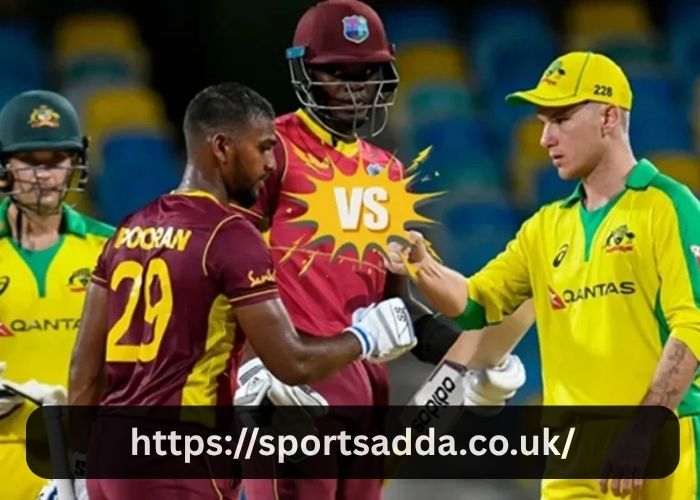
Shamar Joseph led a historic turnaround as West Indies secured their first Test victory in Australia since 1997, delivering a match-winning bowling performance that stunned the hosts.
His exceptional pace and control dismantled the Australian batting lineup, marking a defining moment in modern Caribbean cricket.
This landmark win is now a key highlight in the West Indies Cricket Team Vs Australian men’s Cricket Team Match Scorecard, showcasing how individual brilliance can shift the balance in a long-standing rivalry.
Fraser-McGurk and Bartlett have been named to Australia’s ODI squad.Travis Head was released from white-ball squads.Starc has now reached 350 Test wickets, coming close to Dennis Lillee’s record. Shamar Joseph made his Test debut while Justin Greaves and Kavem Hodge also debuted as new Test players.
| Date | Match | West Indies Score | Australia Score | Result |
|---|---|---|---|---|
| 28 Jul 2025 | 5th T20I | 170 (19.4 ov) | 173/7 (17 ov) | Australia won by 3 wickets |
| 27 Jul 2025 | 4th T20I | 205/9 (20 ov) | 206/7 (19.2 ov) | Australia won by 3 wickets |
| 26 Jul 2025 | 3rd T20I | 214/4 (20 ov) | 215/4 (19 ov) | Australia won by 6 wickets |
| 23 Jul 2025 | 2nd T20I | 172/8 (20 ov) | 173/2 (15 ov) | Australia won by 8 wickets |
| 21 Jul 2025 | 1st T20I | 189/8 (20 ov) | 190/7 (19.2 ov) | Australia won by 3 wickets |
The rivalry between the Australian Men’s Cricket Team and the West Indies Cricket Team
The Australian Men’s Cricket Team and West Indies have an enduring rivalry that spans decades of cricket history, witnessing dramatic shifts in dominance, iconic players, and unforgettable matches over decades of competition.
It shaped international cricket and continues to provide thrilling performances around the globe; its timeline represents golden eras interspersed with modern contests which has contributed significantly towards shaping cricket as a sport today.
As cricket evolved, Australia’s Men’s Cricket Team soon emerged as one of the premier teams worldwide, becoming a force across Test matches and one-day internationals.
Led by speed bowling and aggressive batting styles that produced world-class players, their dominance led to fierce rivalries between themselves; each side using their individual strengths to ensure thrilling matches between themselves.
Australia had an early advantage against West Indies Test matches due to their superior fast bowling attack, dominating games through consistent pressure. But, gradually, West Indies started finding their batting form and counteracted Australia’s dominance.
By the time of Woolloongabba Test 3, Clive Lloyd’s side had lost some of their initial strength and power. While they still managed to win both Benson & Hedges limited-over competition and draw three-test series against New Zealand, losing Melbourne was seen as an indicator that something might be amiss.
Windies batted first and posted 453 for 6 on an indifferent pitch; Garfield Sobers scored the top score with 132 while other Windie players like Norm O’Neill, Rohan Kanhai Joe Solomon and Gerry Alexander each contributed half-centuries. Australia captain Richie Benaud used speed bowlers Davidson Lindwall and Goddard to reduce them quickly to 236 all out in their second innings.
Although Alf Valentine and Wes Hall had made important contributions with their batting (both scoring centuries), their efforts weren’t enough to prevent a 5-0 whitewash defeat at Sydney in the second Test.
Their second chance to avoid whitewash came during Adelaide’s fourth Test but their poor pitch combined with four run-outs prevented any remarkable comeback attempt from succeeding.
The era of dominance
Australia and West Indies have engaged in an epic rivalry for nearly 100 years, featuring shifting dominance, legendary players, and unforgettable matches. This captivating saga has helped shape international cricket and continues to excite fans around the world.
At first, Australia held an overwhelming advantage against Caribbean opponents; but as both teams discovered new strengths, matches gradually became more competitive; eventually this rivalry has reached new levels with both teams striving for dominance in Twenty20 cricket competition.
Windies cricket was at its pinnacle during the late 1980s and early 1990s. Their fearless batting style and powerful pace attack made them an unstoppable force, producing high run chases, thrilling individual battles and fierce sledging between games.
Their rivalry reached its zenith under Viv Richards who became well known for his unstoppable batting style and uncompromising approach to bowling. But with T20 cricket coming onto the scene both teams accepted its format fully while creating balanced squads of their own.
Both teams adapted quickly to the shorter format and produced thrilling, high-scoring contests. While Windies emphasised power-hitting and aggressive batting styles, Australia emphasized discipline and consistency; matches were intensely competitive with sledging and psychological warfare adding further excitement; thus becoming one of the world’s most well-known rivalries and each side celebrating success with jubilation.
Australian cricket dominated Test and ODI matches early this decade, but West Indies teams staged a comeback.
Led by T20 player Delray Floyd, they’ve become an unstoppable force with match-winning runs providing them an edge against Australian opponents. Rivalries between both sides have reignited some of their old magic and both now compete fiercely for glory in high-scoring encounters that provide compelling entertainment.
The era of improvement
Australia created an unrivalled team during this era with world-class players, dominating both ODI and Test cricket with consistent victories.
West Indies continued their struggle in longer formats but produced some spectacular performances that entertained fans and added depth to the rivalry.
T20 cricket introduced new excitement into this rivalry; both sides held competitive matches that provided fans with high scoring games with thrilling finishes – something Australians and West Indians could only dream about before!
Throughout this era, both teams advanced significantly. Australia’s comeback was spearheaded by Steve Waugh’s determination and mental toughness – an influence felt across generations of young players he inspired.
West Indian cricketers such as Viv Richards and Curtly Ambrose helped revitalize their side as their fearsome pace attack and explosive batting lineup proved near unbeatable; their rivalry turned into one based on prideful dominance as matches became epic events that would forever remain part of cricket history.
The Era of Improvement marked one of the most memorable periods in rivalry history, when West Indies were considered unofficial world champions of cricket and began dominating matches, often through aggressive approaches that involved sledging or psychological warfare tactics; it led to brilliant individual duels between batsmen and bowlers that contributed greatly to fiery rivalries; Test series were often one-sided but this period remains considered among its most vital moments in its long history.
T20 cricket has created an even playing field between Australia and West Indies, each side exhibiting strengths and weaknesses that make for an exciting competition.
While Australia remain superior T20 side, West Indies possess some intriguing players who could turn the tables over time;
Cameron Green in particular is showing great promise as a fast-medium bowler and can provide effective alternatives to injured Peter Siddle and James Pattinson; this should prove vital during Test matches against Windies in coming weeks.
The era of T20 cricket
T20 cricket was introduced in 2003 as an effort to attract new audiences and revive the game, and quickly gained in popularity and profitability.
Its rules prioritize scoring and hitting, leading to it quickly becoming the most beloved form of cricket among fans and television audiences alike. Since 2007, when its inaugural men’s ICC World Twenty20 took place in South Africa, its popularity has spread globally – millions watch as domestic tournaments such as Indian Premier League feature T20 matches every week!
T20 matches take up only about an extra 30 minutes than first-class and List A matches, featuring a set number of overs with limited fielding restrictions that encourage batsmen to hit big hits. As one of the shortest forms of cricket played at high levels worldwide and overseen by the International Cricket Council.
While some were dismayed at the loss of the traditional game format, others welcomed T20 cricket with open arms, knowing it would draw more fans and help the sport survive in our modern age of short attention spans. Furthermore, T20 cricket provides younger players an opportunity to sample professional cricket before making up their minds about becoming professional players themselves.
T20 cricket matches between teams from different nations frequently employ the T20 format. Since 2004, when 76 nations adopted it and hosted their inaugural Women’s T20 World Cup and first official Men’s ICC T20 International (T20I) matches respectively in Auckland in February 2005, over 200 international T20 matches have taken place under this format.
T20 matches consist of both teams playing one innings each that lasts no longer than 20 overs, during which they must score more runs than their opposing side in order to win the match. Should both sides finish tied on scores at the end of their innings, a super over is used to determine who takes home victory.