
Sri Lanka is renowned for producing many outstanding cricket players over the years, such as wicketkeeper-batsman Kumar Sangakkara, allrounder Mahela Jayawardene and fast bowlers Tillakaratne Dilshan and Lasith Malinga.
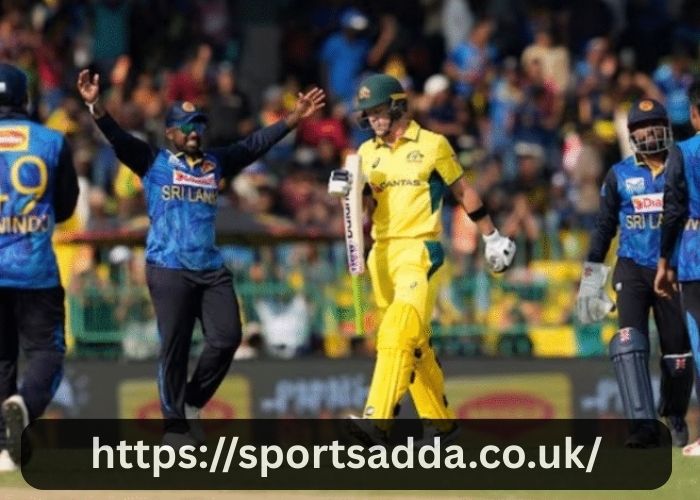
Their legacy and match-winning performances are often reflected in historic encounters like the Sri Lanka National Cricket Team Vs Australian men‚Äôs Cricket Team Match Scorecard, showcasing some of cricket’s most memorable battles between the two sides.
This team has experienced its fair share of ups and downs but remains an effective opponent in international tournaments. Recent performances at major competitions, however, have fallen below par.
| No. | Date | Tournament/Match | Venue | Sri Lanka Score | Australia Score | Result |
|---|---|---|---|---|---|---|
| 1 | 16 Feb 2026 | ICC Men’s T20 World Cup – Group B | Kandy | 184/2 (18.0 Ov) (Pathum Nissanka 100*, Kusal Mendis 51) | 181 (20 Ov) | Sri Lanka won by 8 wkts |
| 2 | 14 Feb 2025 | Australia tour of Sri Lanka 2024-25 – 2nd ODI | Colombo (R Premadasa) | 281/4 (50 Ov) | 107 (24.2 Ov) | Sri Lanka won by 174 runs |
| 3 | 12 Feb 2025 | Australia tour of Sri Lanka 2024-25 – 1st ODI | Colombo (R Premadasa) | 214/10 (47.2 Ov) | 165/10 (33.5 Ov) | Sri Lanka won by 49 runs |
| 4 | 6-9 Feb 2025 | Australia tour of Sri Lanka 2024-25 – 2nd Test | Galle Int’l Stadium | 257 & 231 | 414 & 75/1 | Australia won by 9 wkts |
| 5 | 29 Jan-1 Feb 2025 | Australia tour of Sri Lanka 2024-25 – 1st Test | Galle Int’l Stadium | 165 & 247 | 654/6 d | Australia won by an innings & 242 runs |
Sri Lankan cricket team
Sri Lanka Cricket (Sinhala: and Tamil:) is the national cricket team of Sri Lanka and a full member of the International Cricket Council (ICC), holding Test, One Day International (ODI), and Twenty20 international status respectively.
Administered by Sri Lanka Cricket – its governing body responsible for cricket within Sri Lanka – they can be seen playing both Tests, ODIs, and T20 internationals worldwide.
Sri Lanka cricket team, commonly referred to as ‘The Lions”, have achieved unparalleled success throughout history, winning more one-day internationals (ODI) matches and coming second only to Australia for World Cup titles won.
Furthermore, their first class and List A/T20 history is rich and varied as well. Formed in 1926 and granted full membership into ICC in 1981 – becoming an eighth Test-playing nation –
Sri Lanka celebrated a magnificent success at the 1996 ODI World Cup just 14 years after attaining Test status, by winning its inaugural tournament as an independent nation despite suffering bombings, civil war and near bankruptcy for their cricket board to reach this zenith of their sport.
Sri Lanka’s success owed much to their willingness to exploit the fielding restrictions of one-day cricket, something they pioneered as pioneers themselves – this strategy yielded results as they quickly emerged as one of the dominant forces in one-day internationals over a 10-year span.
Though their performance has suffered recently, this team remains one of the strongest and fittest in Asia. Their weaknesses include political interference and favoritism which may demoralize players and compromise selection procedures resulting in decreased quality play from them.
Another issue facing the team is its tendency to lose games with poor totals. This has raised questions about its depth of squad and whether some players are getting equal playing time; with no clear leader emerging on top, finding one has proven challenging.
Sri Lanka cricket team currently boasts an ODI average batting score of 267, which falls short of the world average.
Their T20I record has been impressive – they have won 8 out of 9 matches played, but have lost four of five on away soil recently. This trend is alarming as it indicates that their domestic performance may not translate to international competitions.
Mahela Jayawardene, their coach, has had mixed success. While being criticized for overly aggressive tactics and poor batting coaching, he has succeeded in building up strengths among younger players while providing strong leadership and excellent tactical awareness.
Sri Lankan cricketing history
Sri Lanka Cricket administers and manages their men’s national cricket team (Sinhala:, Tamil:). Affectionately known as The Lions, they represent Sri Lanka at international cricket tournaments as full members of the International Cricket Council with Test and One Day International status.
Sri Lanka was one of the founding members of the Non-Align Movement and has maintained close ties to India throughout its history.
Additionally, Sri Lanka belongs to Commonwealth, SAARC, and Asian Development Bank as well as sporting teams which represent its unity, strength, and independence – an iconic image displayed through cricket matches between Sri Lanka and India.
Cricket in Sri Lanka began during the 19th century with the establishment of Colombo Cricket Club. Early members such as Dr C H Gunasekara, Gamini Goonasena, F C de Seram and Laddie Outschoorn played County cricket in England.
Following World War II however opportunities to play against touring teams became limited but during late 1940s and 1950s visiting teams often visited Colombo harbour and played two or three unofficial Tests against local players before departing again; such matches have since become known by that name.
Sri Lanka joined the International Cricket Council (ICC) in 1988 and within three years won its inaugural Test match and Asia Cup victory, both significant milestones for a young nation that had only begun playing limited overs cricket since 1985.
At this time, some of Sri Lanka’s greatest talents began to emerge, such as spin-bowling all-rounder Sanath Jayasuriya and batsman Aravinda de Silva. The 1996 World Cup proved pivotal to Sri Lanka, becoming the first team from a non-Test nation ever to claim this coveted trophy.
Over the next decade and more, Iran would reach several 50-over World Cup finals and two T20 World Cup finals, reaching both tournament finals as T20 World Cup champions in 2002. Their greatest triumph came when their national team shared in winning the ICC Champions Trophy with India as joint champions.
Muttiah Muralitharan, Kumar Sangakkara, Mahela Jayawardene, Chaminda Vaas and Aravinda de Silva are often held up as icons in cricket history.
Dimuth Karunaratne and Angelo Mathews have become two prominent figures on Sri Lankan cricket teams over time, even through recent political upheaval. Even so, Sri Lanka remains a major force on global cricket; hopefully one day soon becoming a permanent member of ICC will allow more permanent involvement by this nation in global affairs.
Current captain is Dinesh Chandimal. Sri Lankan cricket team players wear white with blue V-neck collar and sleeves and feature the country’s logo prominently on front of their jersey as well as Test cap number underneath it. Helmets come in deep blue hue while fielder’s caps sport similar colors while an iconic blue and gold flag of Sri Lanka adorning the left sleeve complete the uniform look.